
Lab Note 02
We’re working to make a kitchen more intelligent.
Connecting product knowledge, practical food experiences and the return to people, food brands and producers.
In our first Lab Note, we described reality as the fourth wall of AI adoption: making something useful within the circumstances of someone’s life, where effort, resources and consequences matter.
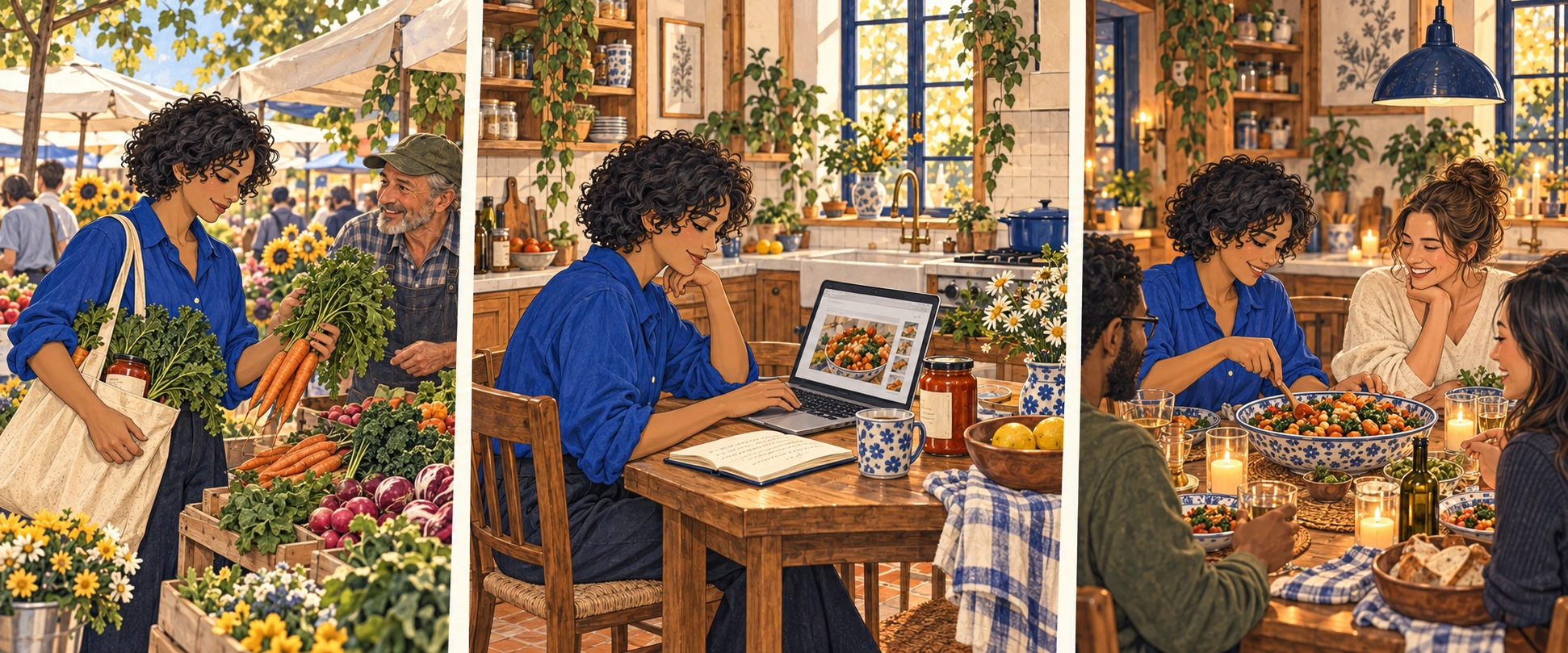
Our relationship with food.
Our Kitchen research proposition takes that challenge into our relationship with food. We’re investigating whether physical-first intelligence can help people develop practical knowledge, care for themselves and others, and gain greater control over what they can accomplish.
Our thesis is intent + digitized effort = agency over a moment. The research has to establish whether that agency becomes something a person can exercise in their own circumstances.
Food producers and brands have a role in developing what that means.
A producer knows something about what it grows. A brand knows its ingredients and intended uses. A person knows what they want to make happen. Whether those things work together depends on the kitchen, available time, equipment, experience and other people involved.
The practical problem is the distance between knowing about a food product and making it useful in someone’s life.
A brand’s products already enter our kitchens. Its marketing already introduces possibilities. We’re exploring how those existing relationships can become useful participation in planning, preparing and sharing food—and how what happens can inform the product’s next development.
A kitchen in context.
The System of Things gives that work a structure. It connects a person’s intention with the relevant places, ingredients, equipment and methods. Vegetables from a garden, a product bought last week and a meal planned for tomorrow can belong to the same experience. Their relevance changes as people prepare, use things and change their plans.
We’ve been developing Veil to connect engagement with the places, things and moments where it can be useful. It uses spatial relationships and a person’s deliberate presence to make the appropriate utility available—for example, around the pantry or fridge in their own kitchen.
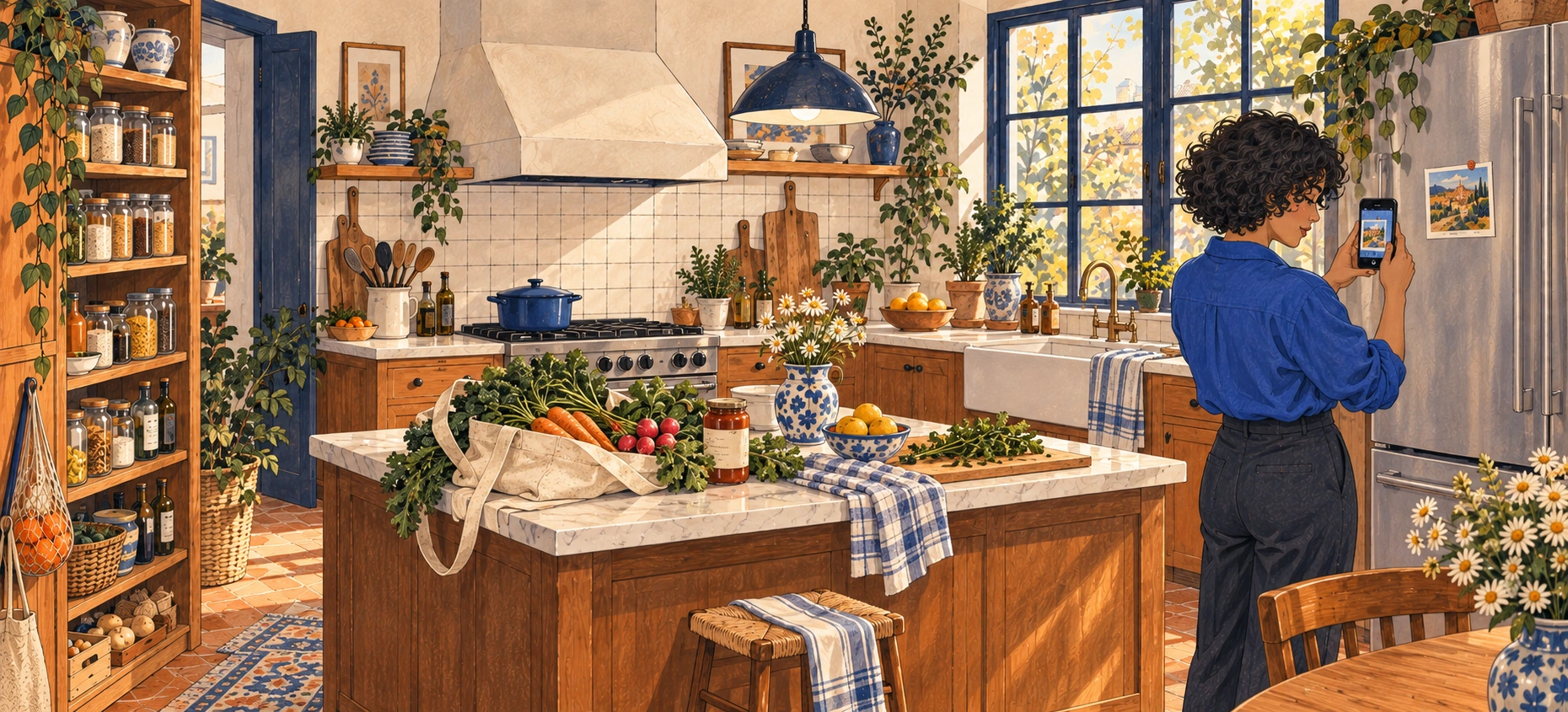
One kitchen, connected.
FROM THE SYSTEM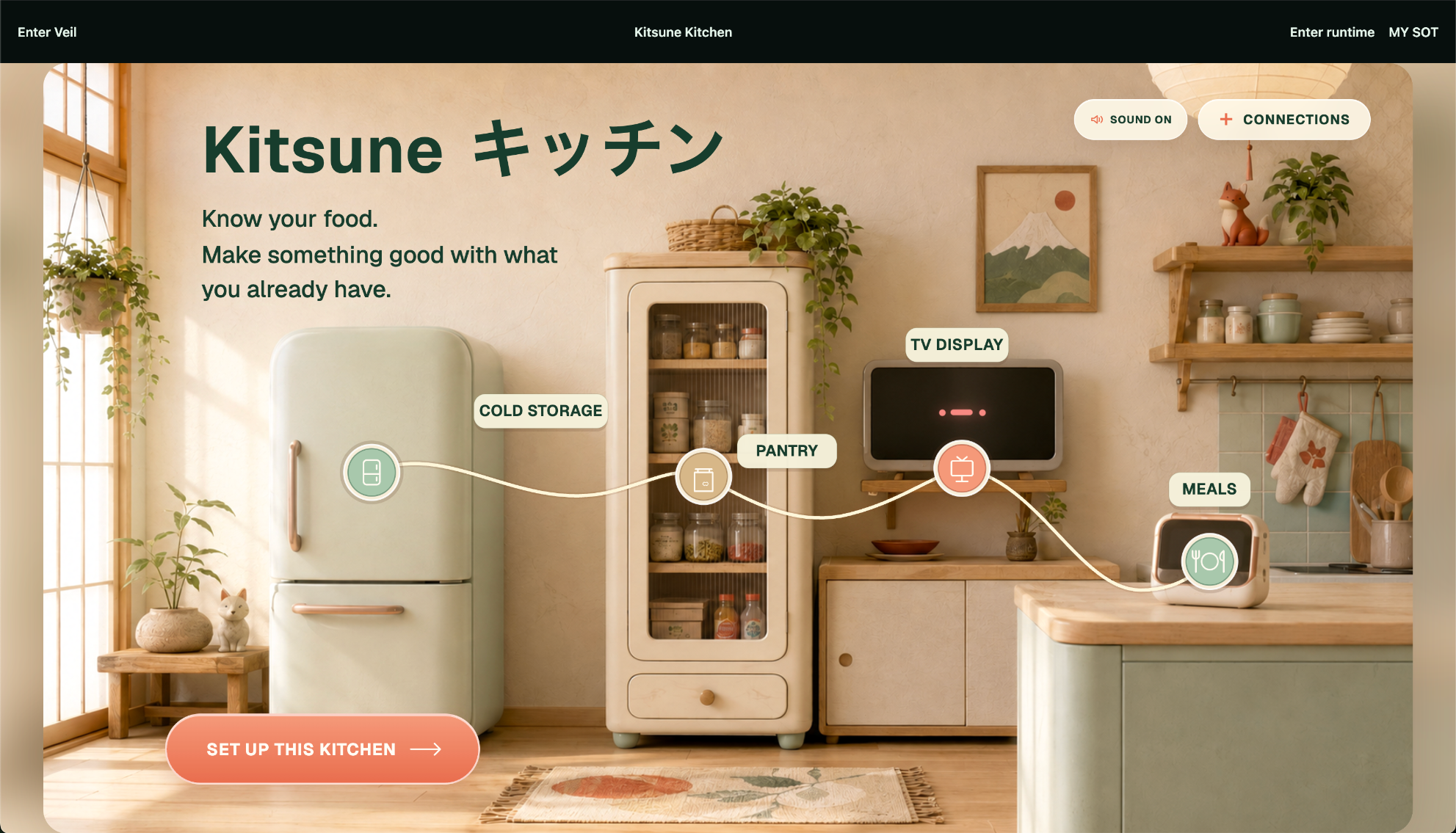
One kitchen, connected.
Cold storage, pantry, Meals and a shared TV display are visible together on the kitchen map. Each provides a starting point for an engagement within the same kitchen.
Development capture · 15 September 2026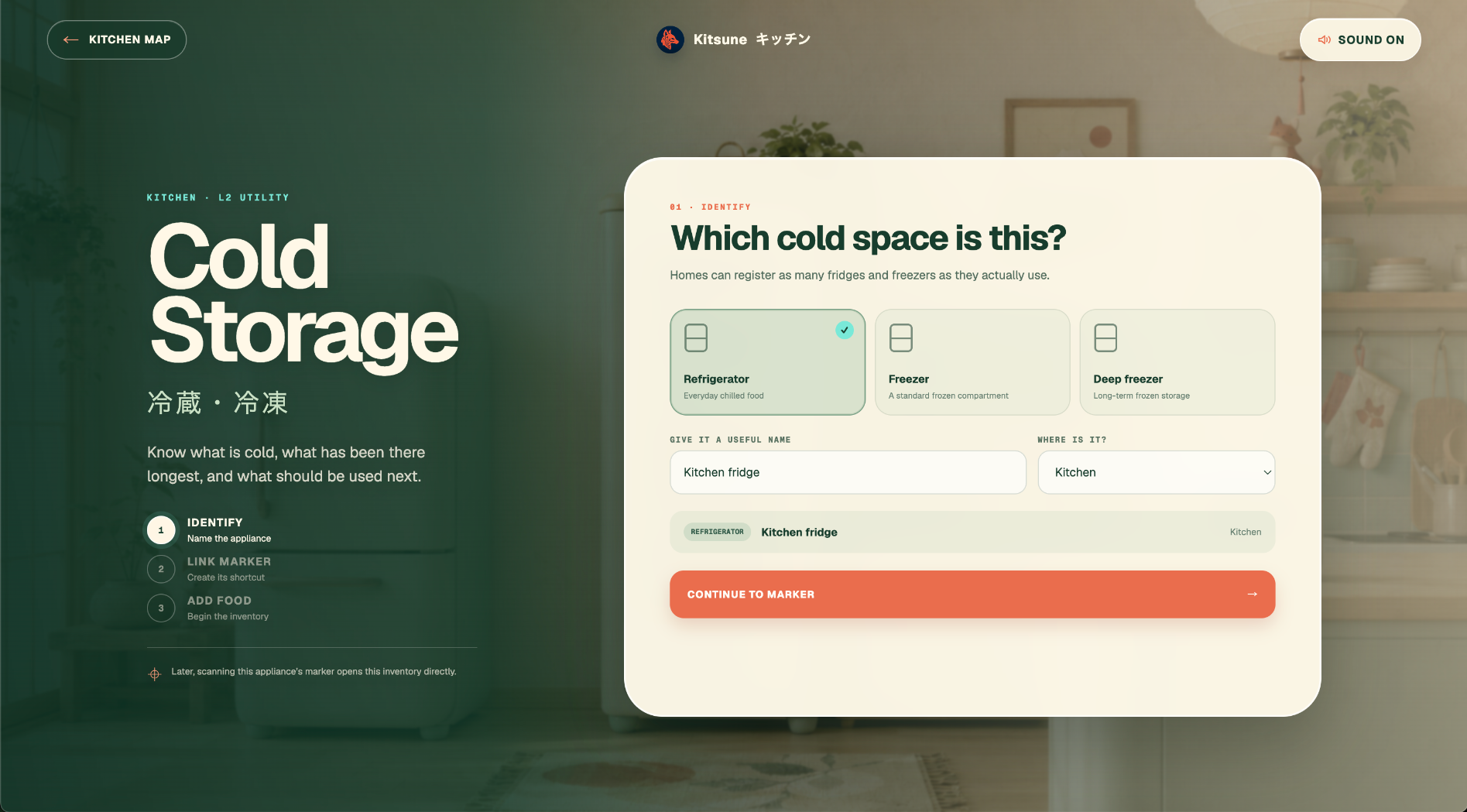
Give cold storage a place.
The setup asks which cold space the person uses, what to call it and where it belongs. Refrigerator, freezer and deep freezer appear as distinct choices.
Development capture · 14 September 2026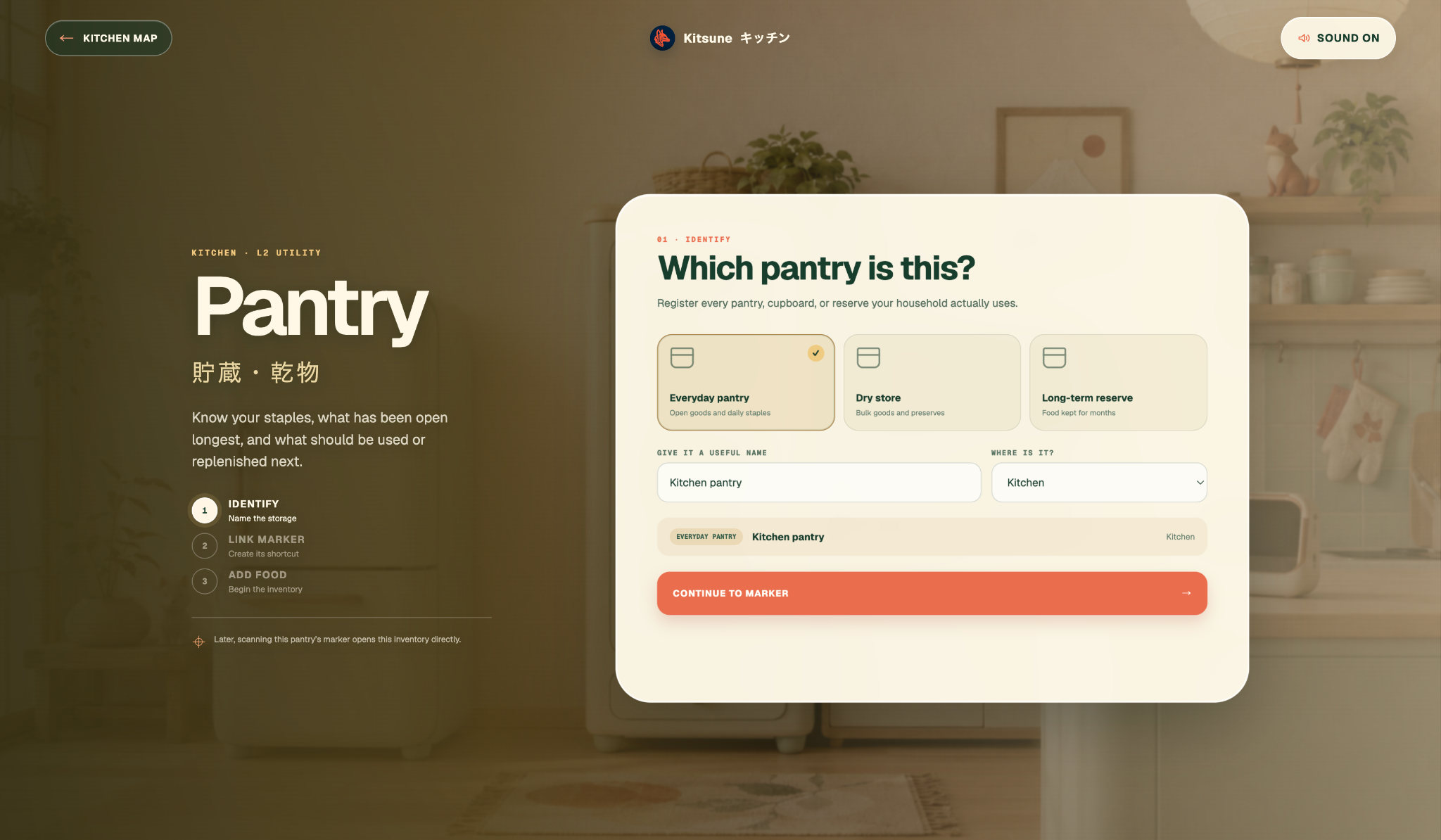
Make the pantry recognizable.
The pantry setup distinguishes everyday storage, dry stores and longer-term reserves. Naming the pantry and its room gives the next engagement a particular place to return to.
Development capture · 5 September 2026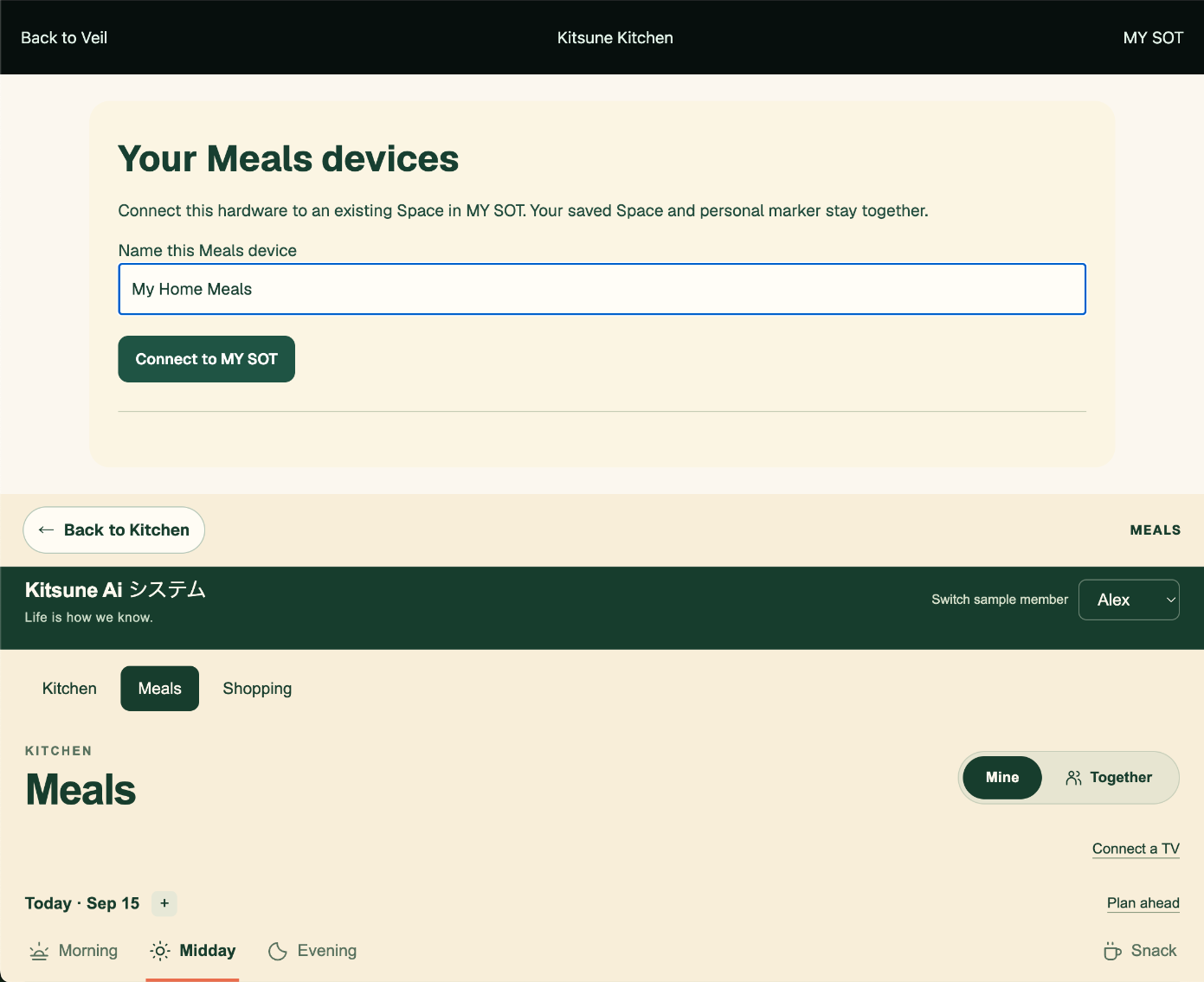
Bring Meals into the kitchen.
This development view names the Meals device and offers a connection to an existing kitchen Space. The Meals view below includes Kitchen, Meals and Shopping, with Mine and Together choices. It shows the setup interface, not a completed connection.
Development capture · 15 September 2026A shared view of the kitchen.
Name a household TV and choose its room. The shared display gives the Kitchen a place everyone can see while planning food or preparing together. This saved prototype shows the setup interface; live household pairing was still in development.
Saved prototype interface · v11 · 10 August 2026Rendered from the archived source.
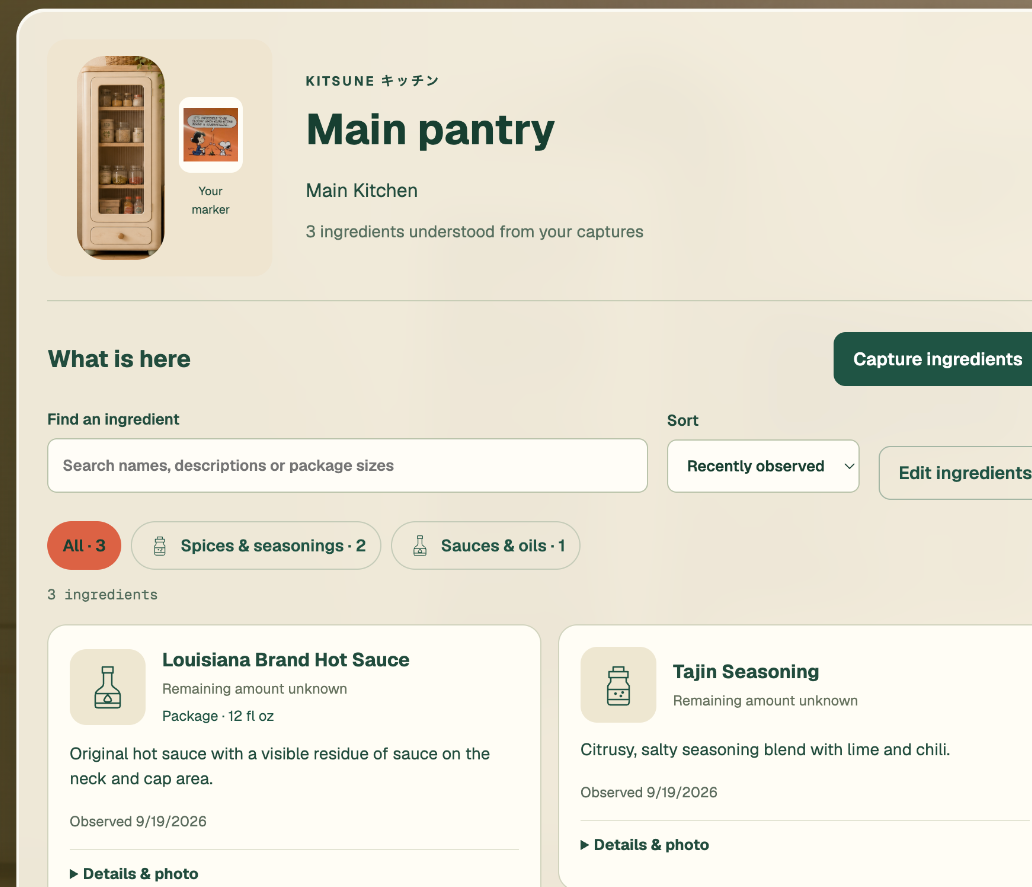
What a capture can leave behind.
The populated pantry shows three ingredients understood from captures, with descriptions, observed dates and controls for correction. Remaining amounts are still identified as unknown where the capture does not establish them.
Development capture · 20 September 2026Before, during and after.
The Kitchen experience we’re building connects that assistance across before, during and after. Planning might begin with tomorrow’s meal or with something bought today. During preparation, what is actually available can change the approach. Something missing can become part of the next shopping plan. A meal worth repeating can carry forward its method, the adjustments people made and what they enjoyed.
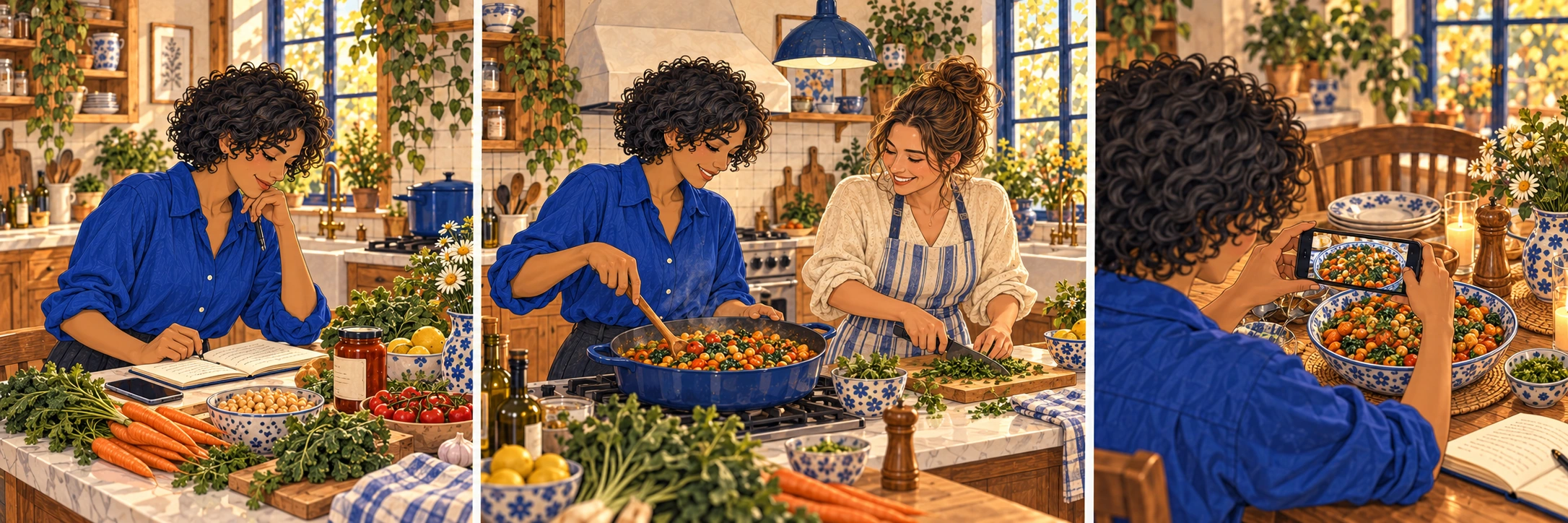
Our Journal gives people a way to capture those details through photographs, short videos and spoken observations. Product information, selected captures and accounts of what happened become connected through their purpose, place and time. The resulting understanding can be reviewed, corrected and used again. People retain control over what they contribute beyond their own use.
And food carries much more than preparation. We talk around it, play, dance, celebrate and bring people together. A successful outcome can mean a tastier meal, learning something new, having more time with friends or making an occasion worth repeating.
Those experiences span our Private, Personal, Professional and Public moments: understanding something for ourselves, sharing within trusted relationships, working in a defined role or choosing to contribute knowledge more widely. Each has its own purpose and terms of participation.
We’re researching how intelligence can contribute to those experiences and help people develop them over time. That includes examining the effort the system asks of people and whether the help is worth returning to.
A useful place in everyday life.
We’re ready to work with food brands and producers who see value in earning a useful place in these moments.
An existing campaign, product page or shelf display can introduce something a person wants to experience—and give them a way to bring it into their kitchen. Product knowledge becomes help they can use while planning and preparing. A meal they want to repeat gives them a reason to include the product in their next shop. Sharing the preparation with friends can carry the experience, and the product’s role in it, further.
That gives us specific opportunities to develop and test together: a more useful path from discovery into use, reasons to return to the product, and experiences people choose to share.

Your products, knowledge and customer relationships give the research something real to work with. Kitsune brings the system, utilities and methodology to develop and test that participation. What people choose to contribute can inform better assistance, preparation methods, packaging and formulation. Your marketing can introduce the work, invite participation and share what the experiments reveal.
We call this the reality loop: an intended experience leads to preparation and use; what happens informs the person’s next choice; permitted findings can also inform the producer’s next decision. Those changes return to everyday use, where we can examine them again.
The reality loop.
Permission to participate in someone’s life has to be earned. The help needs to fit their moment, reward their effort and leave them in control. If it makes the experience better, we have a basis for being invited into the next one—and for developing that relationship together.
Develop the next experience with us.
Talk with the lab ↗Complete published Lab Note.